AEP Is Coming. Don’t Wait Until the Last Minute to Review Your Medicare Coverage!

Let Us Help You Understand Medicare Before Your Coverage Begins
Turning 65 is an important milestone, and choosing your Medicare coverage is one of the biggest healthcare decisions you'll make.
Many people begin learning about Medicare several months before their 65th birthday. Starting early gives you time to understand your options, compare coverage, and prepare for the costs that may come with Medicare.
This guide will walk you through the Medicare basics, explain when you should enroll, and help you understand your coverage choices after enrolling. Whether you're retiring, continuing to work, or transitioning from another health plan, you'll gain the information you need to make informed decisions with confidence.
Our goal is to simplify Medicare so you can choose the coverage that best fits your healthcare needs, budget, and future plans.
WHEN SHOULD I ENROLL IN MEDICARE?
The right time to enroll in Medicare depends on your situation.
If you or your spouse are still working and covered by an employer health plan, your enrollment timeline may be different than someone who is already retired.
Many people worry about missing important Medicare deadlines or paying late enrollment penalties. Understanding when to enroll helps you avoid unnecessary costs and gaps in coverage.
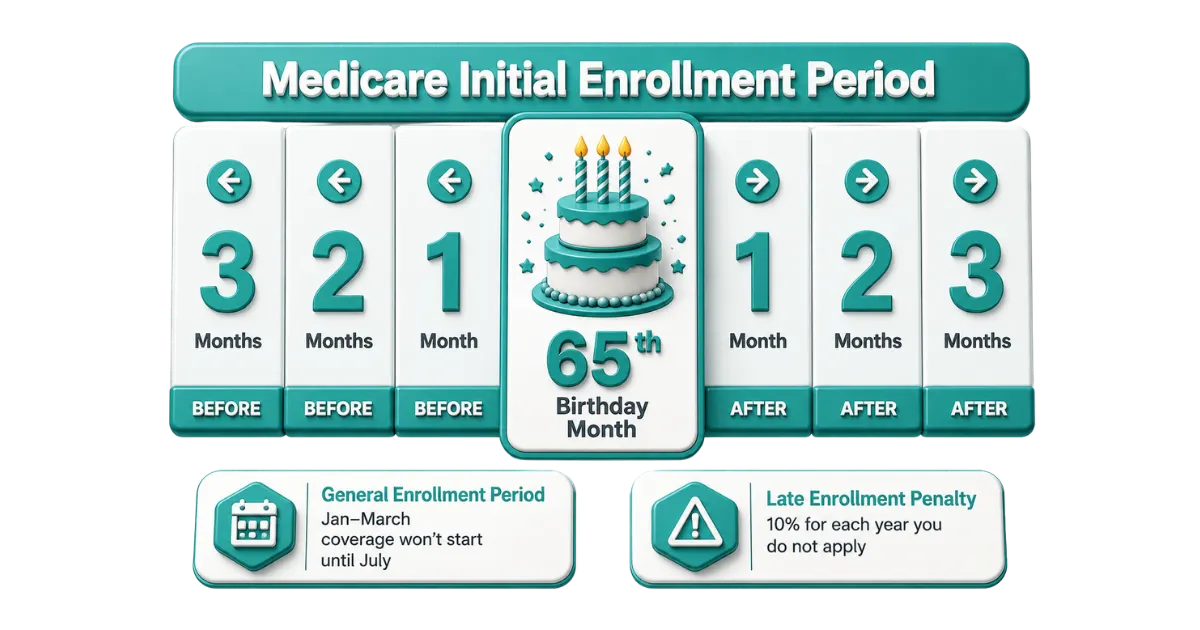
If you are retired and do not have employer coverage through your spouse, you will generally want to enroll during your Initial Enrollment Period (IEP). This seven-month window begins three months before your 65th birthday month, includes your birthday month, and ends three months afterward.
If you currently have an individual health insurance plan, including a Marketplace (Affordable Care Act) plan, you should also review your Medicare options before turning 65. In many cases, enrolling in Original Medicare Part A and Part B during the first three months of your Initial Enrollment Period helps your Medicare coverage begin on time.
WHAT IS MEDICARE?
Medicare is a health insurance program administered by the federal government for people age 65 and over, as well as those with certain disabilities and end-stage renal disease.
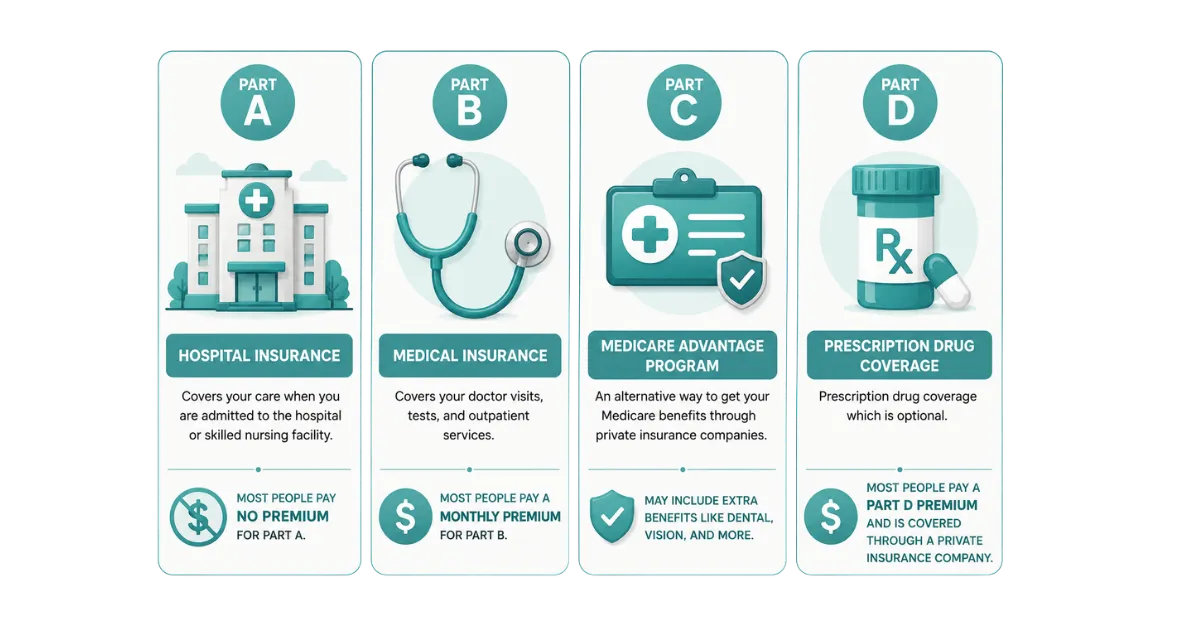
There are four parts to the Medicare program
Part A: Hospital insurance, which covers your care when you are admitted to the hospital or skilled nursing facility. Most people pay no premium for Part A.
Part B: The medical insurance portion, covers your doctor visits, tests, and outpatient services. Most people pay a monthly premium for Part B.
Part C: This is the Medicare Advantage Program.
Part D: Prescription drug coverage which is optional. Most people pay a Part D premium and is covered through a private insurance company.
WHAT ARE MY OPTIONS?
After enrolling in Medicare, the next step is deciding how you want to receive your healthcare benefits. Most people choose one of two coverage options.
Medicare Supplement (Medigap)
With this option, you enroll in Original Medicare Part A and Part B, then add a standalone Medicare Part D prescription drug plan if you need prescription coverage.
Many people also purchase a Medicare Supplement (Medigap) policy to help pay certain out-of-pocket costs, such as deductibles, copayments, and coinsurance that Original Medicare does not fully cover.
This option may be a good fit if you:
• Want the flexibility to see any provider who accepts Medicare.
• Travel frequently within the United States.
• Prefer more predictable healthcare expenses.
Medicare Advantage (Part C)
Medicare Advantage plans are offered by private insurance companies approved by Medicare. These plans provide your Medicare Part A and Part B benefits and often include prescription drug coverage (Part D) in one plan.
Many Medicare Advantage plans also offer additional benefits such as:
• Routine dental care
• Vision benefits
• Hearing benefits
• Fitness or wellness programs
• Over-the-counter allowances, depending on the plan
Understanding Provider Networks
Most Medicare Advantage plans use provider networks.
HMO (Health Maintenance Organization)
An HMO plan generally requires you to receive non-emergency care from doctors, specialists, and hospitals within the plan's network. Care received outside the network is typically not covered except in emergencies.
PPO (Preferred Provider Organization)
A PPO plan offers more flexibility. You may visit providers both inside and outside the network, although you'll usually pay less when using in-network providers. Out-of-network services often have higher copayments or coinsurance.
Which Option Is Right for You?
There isn't a single Medicare option that's right for everyone. The best choice depends on factors such as:
• Your preferred doctors and hospitals
• Your prescription medications
• Your expected healthcare needs
• Your monthly budget
• Whether you travel often
• The level of flexibility you want when choosing healthcare providers
Our licensed Medicare agents will explain both options, answer your questions, and help you compare the plans available through our agency so you can choose the coverage that best fits your needs.
KEEP ORIGINAL MEDICARE AND ADD A MEDICARE SUPPLEMENT?
Many people choose to keep Original Medicare (Part A and Part B) and add a Medicare Supplement, also known as Medigap. This option provides additional financial protection by helping pay many of the out-of-pocket costs that Original Medicare doesn't fully cover.
One of the biggest advantages of a Medicare Supplement plan is flexibility. You can generally visit any doctor, specialist, or hospital in the United States that accepts Medicare, without worrying about provider networks. This makes Medicare Supplement plans a popular choice for people who travel often or want greater freedom when choosing healthcare providers.
Depending on the Medicare Supplement plan you select, your out-of-pocket healthcare costs may be significantly reduced. Many people value the peace of mind that comes from knowing they have more predictable healthcare expenses.
Why Enroll During Your Medigap Open Enrollment Period?
The best time to purchase a Medicare Supplement policy is during your one-time Medigap Open Enrollment Period.
This six-month enrollment window begins when you are both:
• Age 65 or older
• Enrolled in Medicare Part B
During this period:
• You cannot be denied coverage because of your health.
• Insurance companies cannot charge you more due to pre-existing medical conditions.
• You have the broadest selection of available Medicare Supplement plans.
Once this enrollment period ends, you may need to answer health questions before an insurance company decides whether to offer you coverage. Depending on your health history, you may be declined or offered a higher premium unless you qualify for a guaranteed issue right.
Don't Forget Prescription Drug Coverage
Original Medicare and Medicare Supplement plans generally do not include outpatient prescription drug coverage.
If you choose a Medicare Supplement plan, you'll typically also enroll in a standalone Medicare Part D prescription drug plan.
Although Part D enrollment is optional, delaying enrollment without other creditable prescription drug coverage may result in a Medicare late enrollment penalty. If a penalty applies, it may be added to your monthly Part D premium for as long as you have prescription drug coverage.
Our licensed Medicare agents will help you compare Medicare Supplement plans, review your prescription needs, and determine which combination of coverage best fits your healthcare goals and budget.
Ready to review your Medicare options?
Get immediate assistance and understandable answers to make the right choice for your healthcare coverage.
No-cost, pressure-free consultation.
Clear Medicare guidance from a local agent who puts your needs first. We help you understand your options without pressure, so you can move forward with confidence.
Contact Us
Phone: (973) 490-4258
Email:[email protected]
Not connected with or endorsed by the United States Government or the Federal Medicare Program.
We do not offer every plan available in your area. Any information we provide is limited to those plans we do offer in your area. Please contact Medicare.gov, 1-800-MEDICARE, or your local State Health Insurance Program to get information on all of your options.
The public-facing brand, Michael Danis, Licensed Insurance Agent, is operated by Golden Age Assistance LLC.
© 2026 Michael Danis, Licensed Insurance Agent. All rights reserved.